At a Glance
Video courtesy of Last Wilderness Alliance
Enhanced Wakes & Shoreline Damage
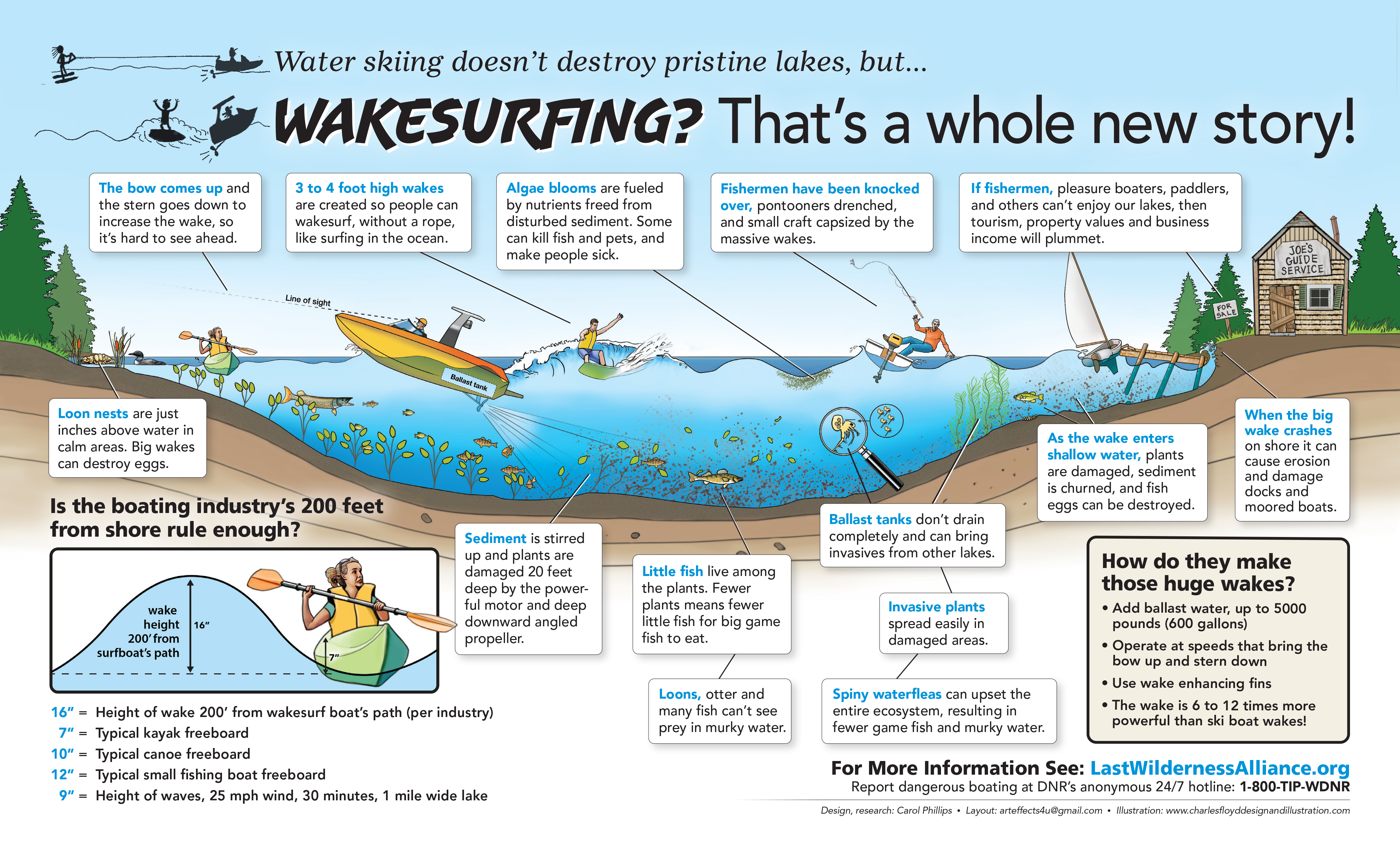
Ballast lowers the stern; wakes can reach 4+ feet. Near shore they damage docks, boats, and erode banks — and create unsafe conditions for swimmers and paddlers. Wakeboats must operate in the middle of the lake.
Sediment Disturbance & Cyanobacteria
All motorboats — not just wake boats — should operate through water at least 30 feet deep and navigate down the center of the lake. Propeller wash in shallow water stirs up phosphorus-rich sediment from the lakebed, which significantly increases the risk of cyanobacteria blooms. Do not deploy ballast until in at least 30 feet of water: wake boats can mix water down to 30 feet or deeper, pulling phosphorus-rich deep water to the surface even in the center of the lake. Learn more.
Invasive Species Risk
Ballast tanks are hard to drain fully; invasives can survive in small amounts of water. Extra care required between lakes. Invasive species prevention.
The Rule
Within 150 feet of shore, island, dock, raft, swimmer, or other boat: slow to no-wake (≤ 6 mph). All vessels. (150 feet ≈ two ski ropes.)
Best Practice Water Ski Towing
Ski down the middle; use long, straight runs with barbell turns. Keep boat and skier 150+ feet from all objects and 500-700 feet from shore.
Boat Safety Checklist
NH Fish & Game requirements for all powerboats and human-powered craft.
Life Jackets (PFDs)
Fire Extinguisher
Sound Signal
Seating Rules
Ignition Lanyard
Paddleboards & Kayaks
On-Board Safety Guide
People & Observer Requirements
- A maximum of two people may be towed at any time.
- An observer who is 13 years of age or older is required in the boat at all times while towing.
- All skiers and wakeboarders must wear a life jacket while being towed.
Time & Distance Rules
- No skiing or towing is permitted before sunrise or after sunset.
- 150+ feet from shore, island, other boats, swimmers, floats.
Loons & Protected Waterbirds
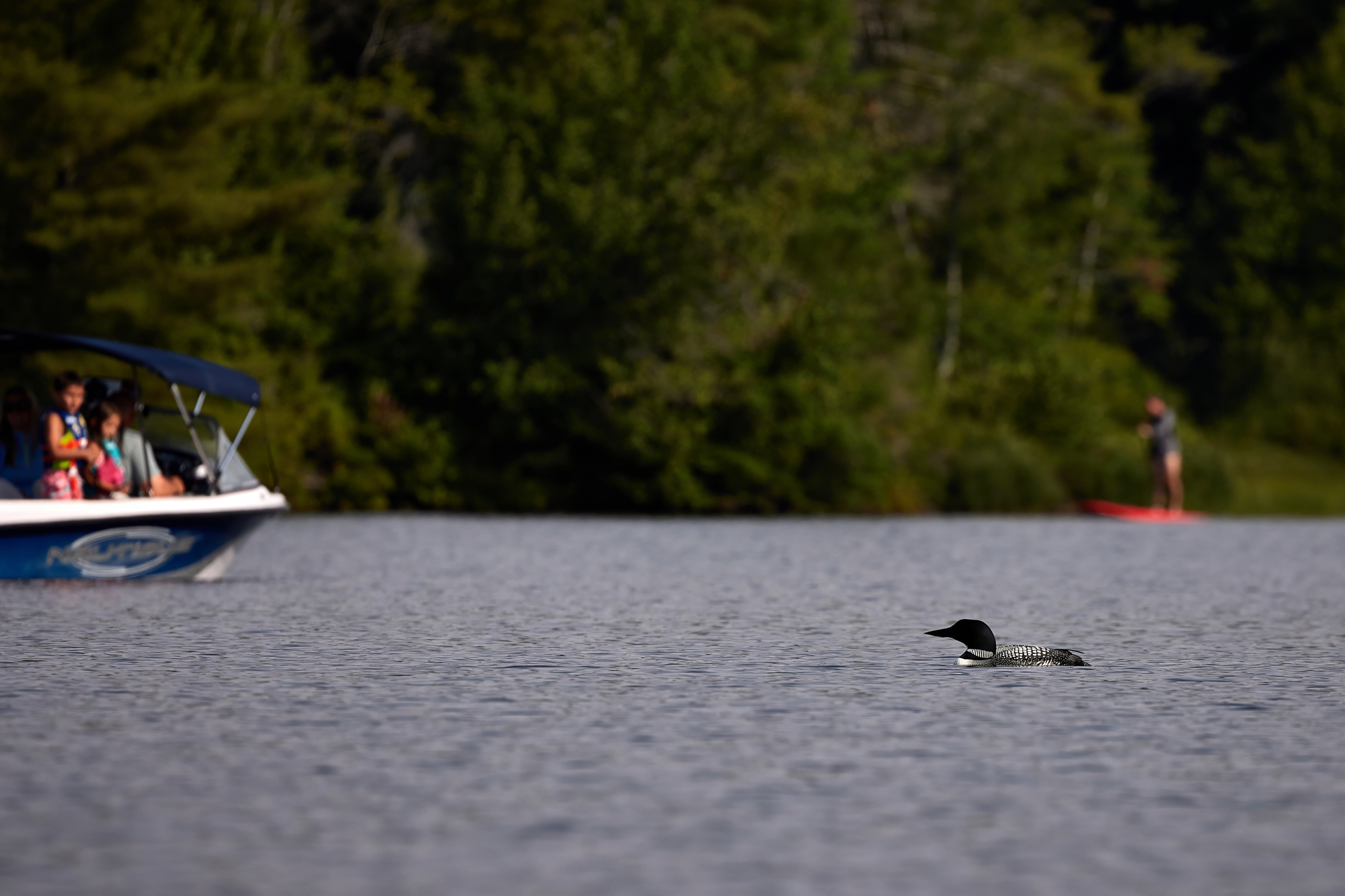
Loons and waterbirds nest here. Give them space.
Loons Are Protected
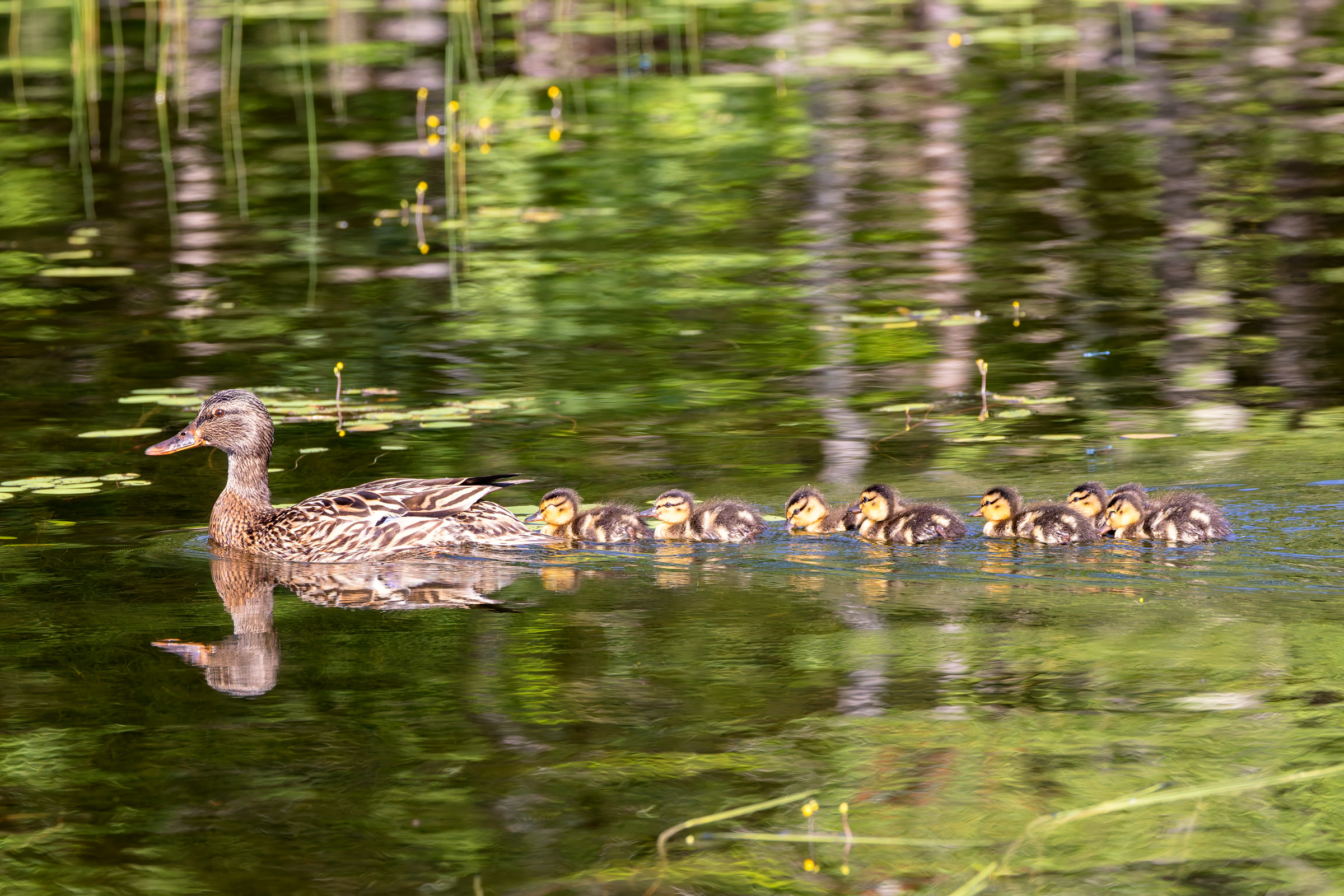
Give All Waterbirds Space
Resources
- On-Board safety — Safe Boating and Fishing Rules (PDF)
- Boating certification — boat-ed.com/newhampshire
- Video: Effects of Wake Boats on Lakes (Last Wilderness Alliance)
- NH Lakes Association — Wake Boat Resources
- Water Quality Data — How Boating Affects Pleasant Lake
- Invasive Species Prevention — Clean, Drain, Dry