At a Glance
What are Cyanobacteria?
Often called 'blue-green algae,' cyanobacteria are bacteria that can multiply rapidly under the right conditions and form harmful algal blooms (HABs) that are toxic to humans, pets, and wildlife.
Not True Algae
Thrive in Warm, Calm Water
May Produce Toxins
Appearance
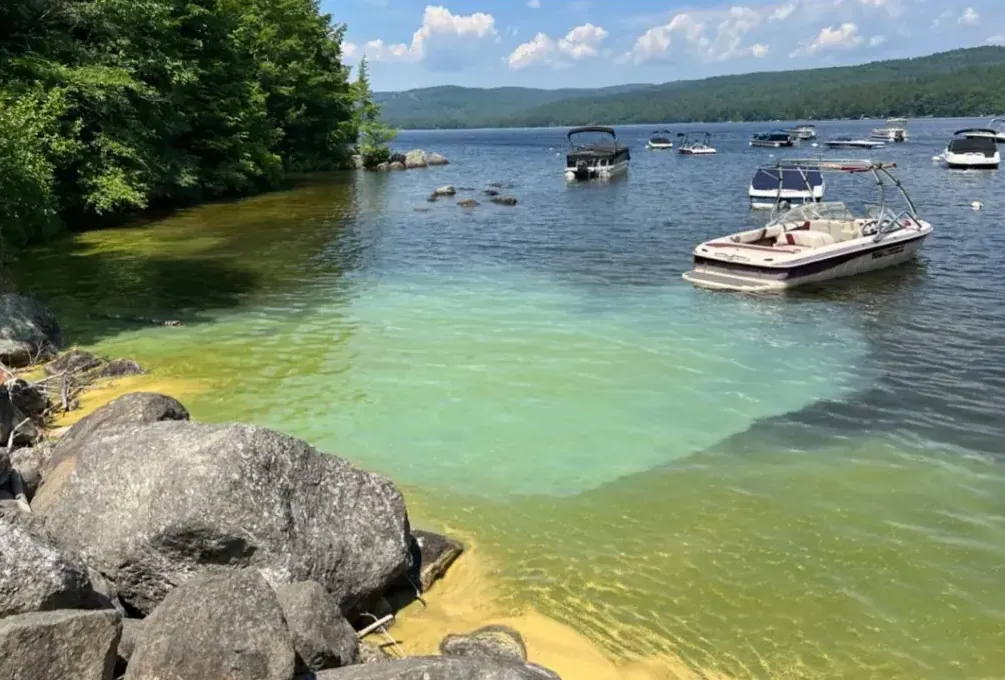
Look for pea-soup green, blue-green, brown, or reddish discoloration — like spilled paint, floating mats, or streaks along shorelines. Blooms often concentrate downwind and near shore, especially on calm mornings.
Smell
Musty, earthy, or grassy odors — similar to rotting vegetation — are a warning sign.
When in Doubt
Treat it as a bloom and stay out. Toxins can persist even after water looks clear.
Health Risks
Exposure can cause effects from mild irritation to severe illness, depending on toxin type and level.

Human Health

Pet Safety
Rising Phosphorus Levels
NH DES VLAP monitoring shows an increase in phosphorus since 2022, when we first experienced cyanobacteria blooms. Small increases can tip the balance. See what can be done to reduce phosphorus in the watershed.
Motor Boats & Sediment Disturbance
Motor boats, especially wake boats, churn up phosphorus-rich waters from deeper in the lake and from shoreline and bottom sediments, releasing nutrients into the warm surface waters, thus creating conditions that promote cyanobacteria blooms.
Wake boats are a particular concern because they can mix water down to 30 feet or deeper. Nutrient concentrations in deeper waters throughout the lake are often higher than at the surface. When boats churn up this nutrient-rich water into the warmer, light-rich surface layer, it creates exactly the conditions that promote cyanobacteria blooms. This is why Pleasant Lake asks that ALL motor boats operate in at least 30 feet of water, which means staying out towards the middle of the lake.
Warm Summers & Extended Calm Periods
Warmer summers extend the bloom-favorable window. Early observation and rapid reporting protect the lake and alert other users.
Doug Darling's Presentation on Cyanobacteria
If you want to know more about cyanobacteria and how harmful algal blooms form and behave, explore Doug Darling's presentation on our Presentations page for an in-depth look at bloom dynamics, risks, and monitoring.
What to Do
Take these steps if you see a suspicious bloom.
Stay Out of the Water
Keep Pets Away
Report the Bloom
Stay Informed
Watch: CyanoHAB Talk
Featured presentation on cyanobacteria dynamics by Doug Darling.
Doug Darling, a resident of a nearby lake who has studied cyanobacteria extensively, shares vital insights into bloom formation, identification, and prevention.