Lake at a Glance
The Monitoring Program
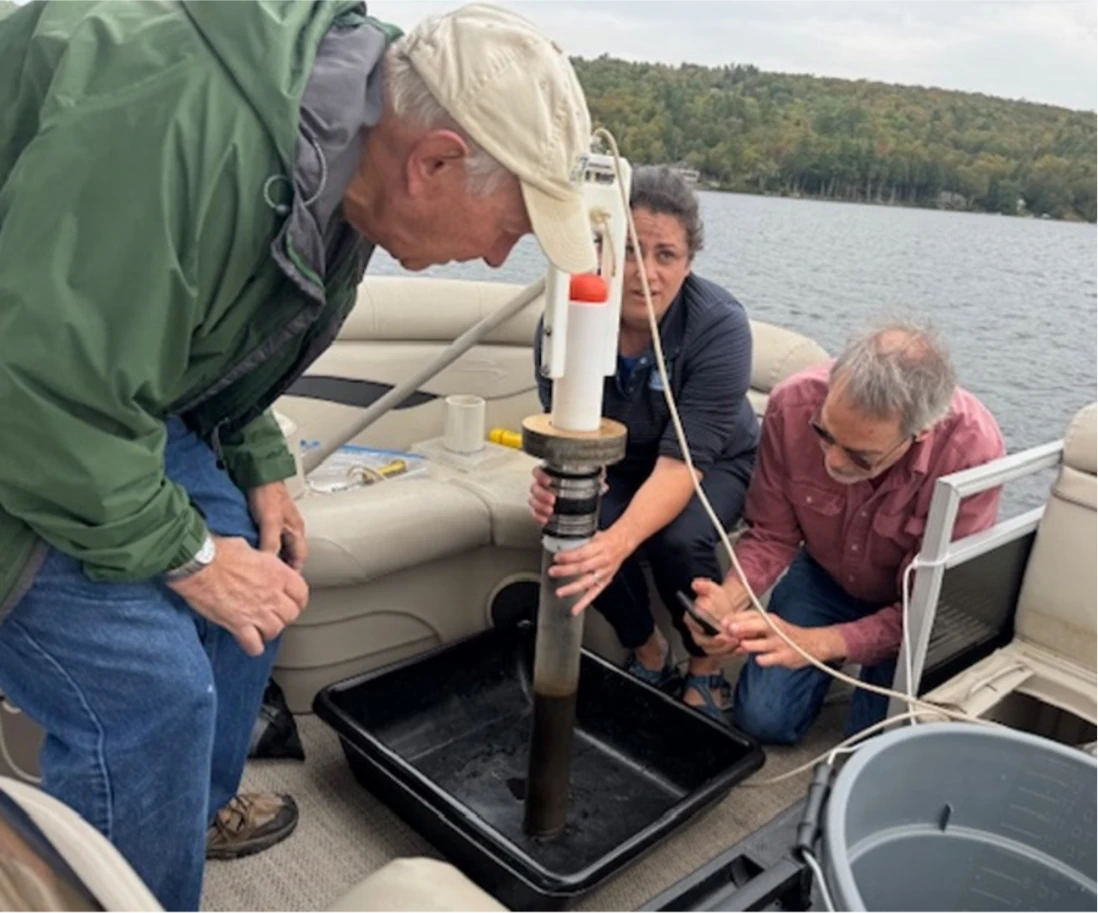
We participate in the NH DES Volunteer Lake Assessment Program (VLAP) — a statewide initiative that trains and coordinates volunteers to monitor lake health across New Hampshire.

The Process

The Goal
Phosphorus – Increased in recent years
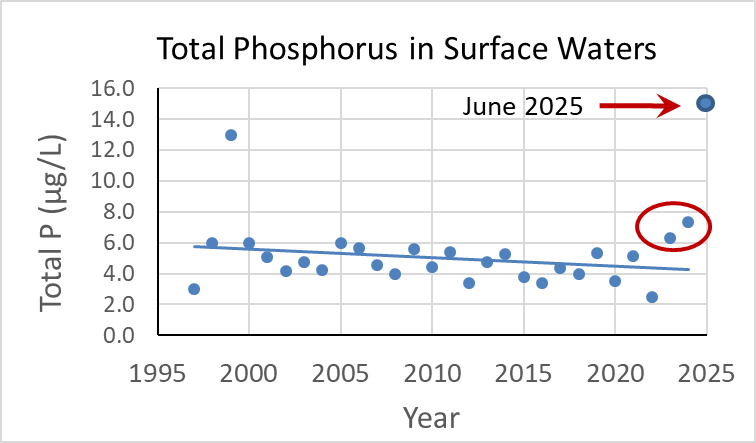
Phosphorus is the primary nutrient that fuels cyanobacteria blooms. Even small increases can tip the balance of a healthy lake. While phosphorus levels were low and stable for decades from 2000 to 2022, there has been a concerning increase in recent years, especially in the spring (April–June), to levels that have caused cyanobacteria blooms.
Surface Water Temperature – Increasing for decades
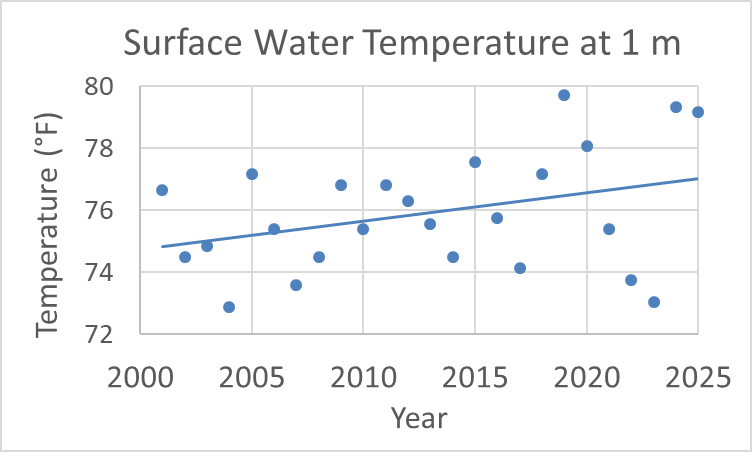
Warmer water temperatures favor cyanobacteria blooms. Surface water temperature has increased by about 2°F in the past 25 years, from an average of 75°F in 2000 to 77°F in 2025.
Winter Ice Cover – Decreasing for decades
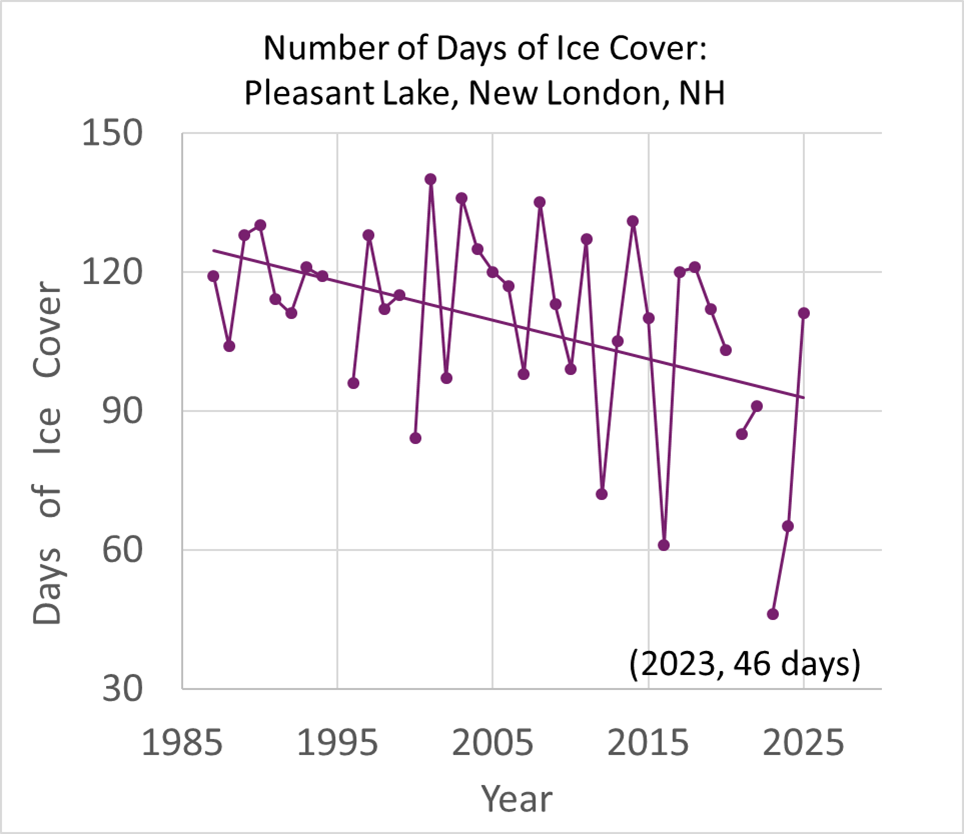
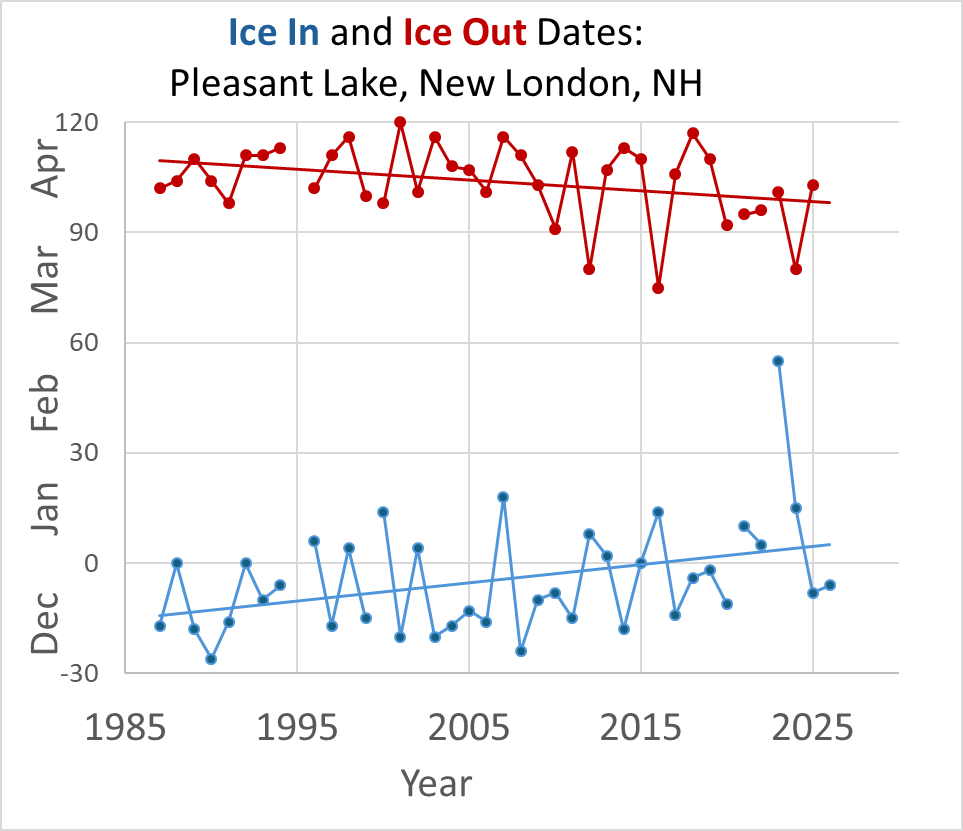
The period of ice cover in Pleasant Lake has decreased from about 4 months in the 1980s to 3 months in recent years. In 2023, the period of ice cover was only 46 days. Shorter periods of ice cover provide higher light, temperature, and nutrient mixing conditions that favor cyanobacteria blooms.
Lake Status – Stable but fragile
Pleasant Lake is classified as "Oligotrophic" — a deep, clear lake with low nutrient levels and high water clarity. However, recent trends in phosphorus, temperature, and ice cover indicate that the lake is becoming more vulnerable to cyanobacteria blooms.
Climate Change Effects on Pleasant Lake
If you want to know more about climate change effects on Pleasant Lake, explore the presentation by limnologist Dr. Craig Williamson, Climate Change and Our Lakes: What It Means for New Hampshire. It examines long-term trends in water temperature, ice cover, and storm runoff.
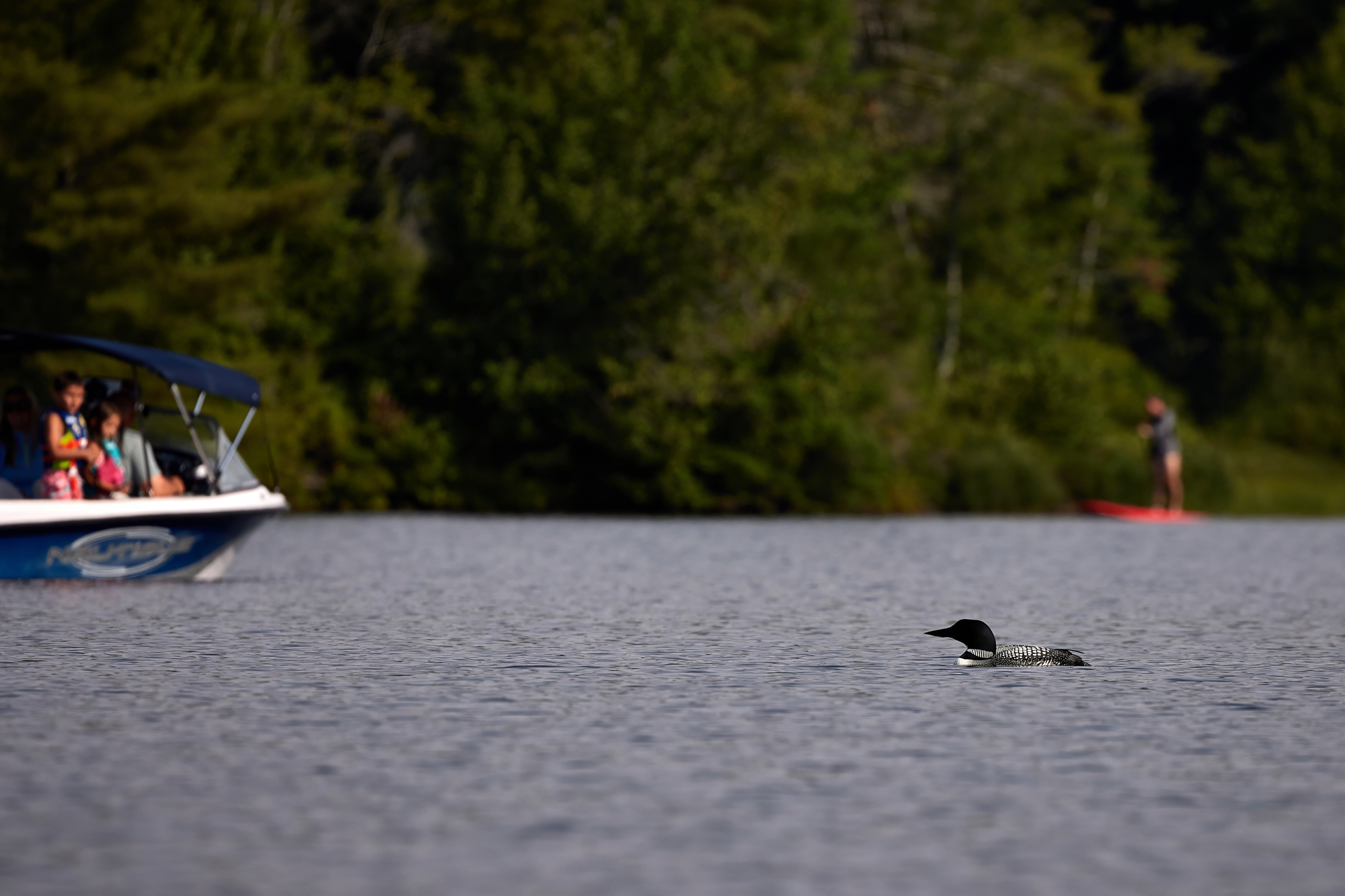
Motor boats, especially wake boats, churn up phosphorus-rich waters from deeper in the lake and from shoreline and bottom sediments, releasing nutrients into the warm surface waters. This creates the ideal conditions for cyanobacteria blooms to form.
The 30-Foot Rule
Wake boats can mix water down to 30 feet or deeper. Because nutrient concentrations in deeper waters are often much higher than at the surface, churning this water into the light-rich surface layer fuels algal growth even in the center of the lake.
Do not deploy ballast until in at least 30 feet of water: wake boats can mix water down to 30 feet or deeper, pulling phosphorus-rich deep water to the surface even in the center of the lake.
Learn more about wake boat impacts and safety.
Disposing of leaves, grass clippings, or other yard debris in Pleasant Lake adds significant amounts of phosphorus and other nutrients to the water. As this organic matter decomposes, it also consumes dissolved oxygen that fish and other aquatic life need to survive.
NH RSA 482-A:3
Prohibits "filling" a wetland or surface water with natural material deposited by human activity without a permit. Dumping leaves or grass is considered illegal filling.
NH RSA 163-B:3
The Litter Control Law makes it unlawful to dump or deposit "litter" (which includes yard waste) into any waters of the state.
Environmental Impact:
- Nutrient Loading: Fuels cyanobacteria blooms.
- Oxygen Depletion: Harms fish populations.
- Mucky Bottoms: Ruinous for swimming and habitat.
Please compost your yard waste away from the water or utilize the Town of New London transfer station.
What You Can Do
Better Boating