At a Glance
NH Lake Host Program
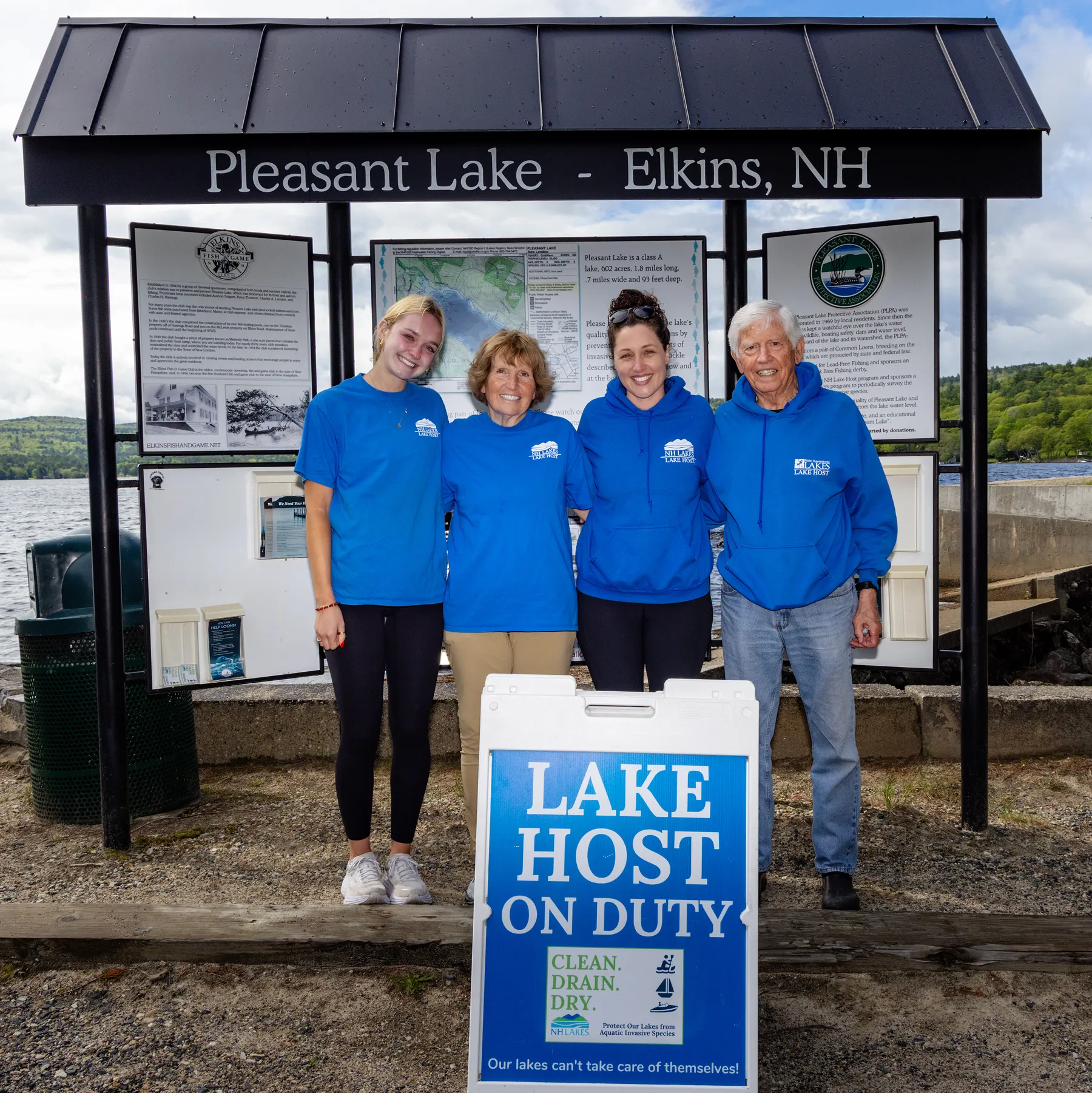
Lake Hosts inspect watercraft and educate boaters at the Elkins Boat Launch during peak season.
What to Expect at the Launch
1. Clean
Remove all plants, animals, and mud from boat, trailer, and gear before leaving. Inspect hull, propeller, anchor, bilge, live well — especially crevices and undercarriage.
2. Drain
Drain bilge, live well, bait well, and all compartments before leaving. Run the motor briefly on land to drain cooling water.
3. Dry
Let everything dry completely — at least 5 days. Or use high-pressure hot water (140°F+) at an NH DES wash station for faster decontamination.
Why Prevention Is the Only Strategy
Once established, invasives rarely leave. Act before the first fragment arrives.
Ecological Collapse
Economic & Recreational Harm
Near-Impossible to Reverse
Variable-leaf Milfoil (Myriophyllum heterophyllum)
Most widespread in NH. Feathery reddish-stemmed leaves in whorls of 4–6; variable shape. Spreads from tiny stem fragments. Forms thick surface mats.
Eurasian Watermilfoil (Myriophyllum spicatum)
Similar to variable-leaf milfoil; more uniform leaves in whorls of four. Highly aggressive. Propeller fragments can establish new infestations miles away.
Fanwort (Cabomba caroliniana)
Bright green fan-shaped leaves in opposite pairs. Thrives in still water; forms impenetrable beds. Often sold as an aquarium plant. NEVER release any aquarium plants or animals into natural waters!
Japanese Knotweed (Reynoutria japonica)
A shoreline plant widespread in the Pleasant Lake watershed and throughout NH. Stems are similar to bamboo, with heart-shaped leaves. Grows over 10 feet tall with very deep and expansive roots, and can spread from a tiny root or shoot fragment. One of the most difficult species to eradicate. Japanese Knotweed guidance (PDF).
Spiny Water Flea (Bythotrephes longimanus)
Tiny crustacean with long barbed tail spine. Spreads via fishing and anchor lines, water in bait buckets, bilge, and wet gear. Devastates zooplankton that eat cyanobacteria and that are food for juvenile fish.
How Invasives Spread
Boats and gear are the primary vectors. A fragment on a trailer or water in a baitwell is all it takes.